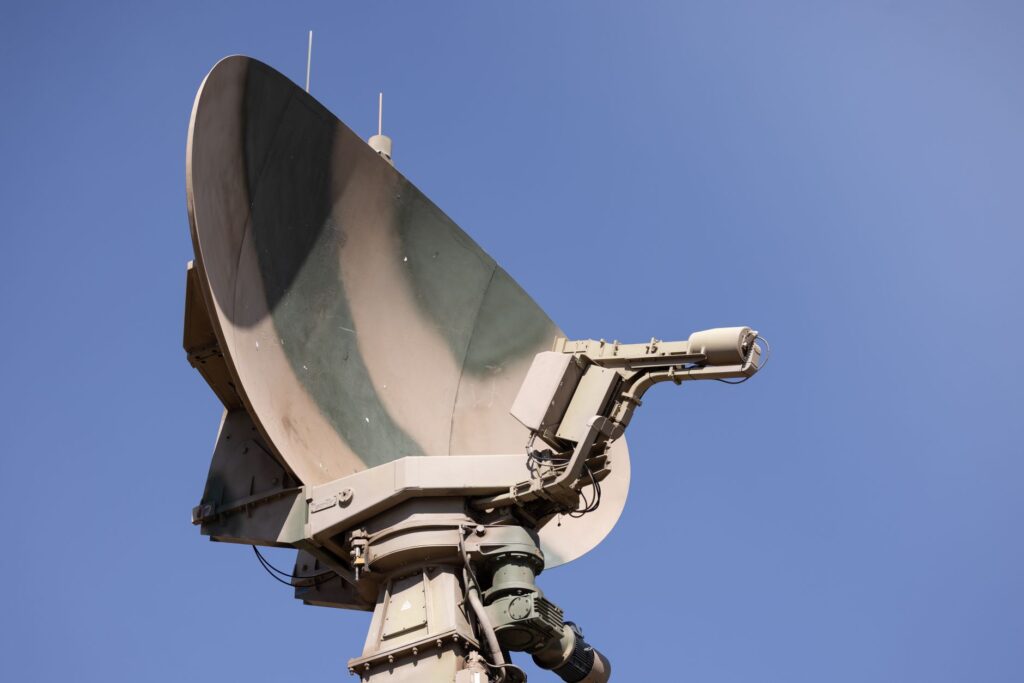
Satellite communications are critical infrastructure, and recent events have shown how quickly cyberattacks can disrupt everyday services. In 2022, during Russia’s invasion of Ukraine, thousands of satellite modems across Ukraine and parts of Europe were reportedly disabled to disrupt communications. In response to the risk of similar attacks—and growing concerns about threats targeting cyber infrastructure—one cybersecurity company has introduced a new approach to testing resilience.
Atalanta has released a product called “Argo,” built around what it describes as AI software understanding. The goal is to help defenders identify vulnerabilities in software and other internet-connected systems in a more comprehensive way, then back those findings with rigorous mathematics.
Why satellite networks face persistent risk
Satellite systems don’t just support transport and broadcasting; they also underpin connectivity for organizations that cannot easily switch providers or reroute traffic. When attackers target the software and components that manage communications, the impact can cascade quickly.
The 2022 incident involving Viasat’s network has become a reference point for the security industry. It demonstrated that attackers can exploit weaknesses to disrupt communications at scale. Since then, concerns about continued aggression and additional threats—including reports that Iranian hackers have focused on sectors like water and wastewater—have amplified the urgency to improve defenses.
In short, defenders are not only fighting known techniques. They also need methods that can handle changing adversary behavior and new targeting patterns across critical sectors.
Argo: using AI software understanding to assess resilience
Argo is positioned as an AI-assisted tool intended to improve how organizations evaluate the security of complex systems. According to Atalanta, the technology relies on a concept it calls software understanding. This combines advanced mathematics with artificial intelligence to analyze software and internet-connected systems.
Rather than limiting analysis to surface-level checks, Atalanta frames the approach as a way to create a broader view of potential weaknesses. The emphasis is on understanding the software behavior and identifying vulnerabilities more comprehensively than many traditional methods.
Company leaders describe Argo as the first commercially available system using this combination of techniques at that scale. For organizations that rely on hardened communications, that matters: you want confidence that systems remain resilient when adversaries change their tactics.
Backed by mathematics, not just predictions
A key theme in how this technology is presented is evidentiary support. Viasat’s chief of cyber strategy, Nick Saunders, said the new capability helps ensure its network is hardened against future attacks, and that it also produces the mathematical basis that supports that claim.
That distinction is important. Security teams often face pressure to “prove” resilience rather than simply observe that vulnerabilities were patched. If resilience claims can be supported by formal math, it may help decision-makers trust the results and prioritize fixes more effectively.
Saunders also indicated that, over the course of the prior year, the teams worked together to develop an understanding of how the systems are more resilient against attack. In practice, that suggests an iterative approach: analyze, measure resilience, and improve.
Proving resilience for emerging adversary attacks
Argo’s relevance to satellite security comes partly from its connection to the real-world challenges highlighted by the 2022 hacking event. Atalanta states that its technology is being used to demonstrate the resilience of Viasat’s satellite communications network against emerging adversary attacks.
Industry experts see this as a new capability for organizations defending critical systems in a cyberwarfare environment. As threat actors evolve their methods, defenders need tools that can keep up—especially in domains where disruptions have high operational and societal costs.
In other words, the objective is not only to identify vulnerabilities today. It’s also to assess how systems might hold up under future attempts to exploit weaknesses.
Software understanding beyond satellites
While the satellite communications use case is prominent, the technology is not described as limited to that sector. Atalanta’s approach has reportedly been tapped for work on the Genesis Mission, an effort by the U.S. Department of Energy to develop autonomous nuclear reactors.
That expands the stakes. Autonomous and mission-critical systems typically demand stronger assurance than conventional software. If AI software understanding can help teams test and validate new capabilities, it could become useful in high-impact engineering programs where failures are costly.
Government researchers have echoed the expectation that this type of technology will eventually become standard in testing new systems—moving from specialized projects into everyday development toolkits.
From defense research to practical standards
Greg Shannon, chief cybersecurity scientist at the Idaho National Laboratory, suggested that the kind of technology Atalanta makes available may become the norm for testing new capabilities over time. He said that in a decade or two it could be part of standard development toolkits.
Shannon also pointed to long-term investment in related research. He noted that DARPA—the U.S. Defense Advanced Research Projects Agency—has funded work on formal methods and related approaches for decades. That investment, he said, helped create the demand for a system like Argo.
DARPA has a history of supporting foundational technology efforts, including early work that contributed to major innovations such as the internet and stealth aircraft. In this context, the argument is that sustained research can eventually mature into tools teams can deploy.
Why the current era demands new tools
Many security experts agree that defenders cannot rely on the same toolsets that worked under older conditions. Atalanta’s CEO and co-founder, Anjana Rajan, emphasized that tools and techniques from the past may not scale to today’s threat environment. She also framed software understanding as the path forward for anyone building systems of consequence.
Her comments reflect a broader reality: modern attacks target complex, connected environments. Defending them requires deeper analysis of software behavior and system interactions, especially when adversaries aim for disruption rather than data theft.
Meanwhile, ongoing reporting about threats to critical infrastructure—such as efforts against water and wastewater systems—reinforces that cybersecurity weaknesses can affect daily life. That adds urgency for practical, scalable methods to assess and strengthen systems.
What this means for defenders
For organizations responsible for communications, industrial operations, or other critical services, Argo’s approach offers a new direction: combine AI-driven analysis with formal mathematics to assess resilience. The aim is to improve understanding of vulnerabilities in internet-connected software systems and to support claims with stronger evidence.
While the technology is still best understood through initial public descriptions and ongoing use cases, the overall message is clear. As cyber threats evolve, defenders need methods that can evaluate resilience against emerging adversary strategies—especially when disruptions are high-impact.
If AI software understanding continues to mature and becomes more widely adopted, it could influence how organizations design, test, and validate security for the systems society depends on.
Conclusion
The 2022 attacks on satellite modems served as a warning that critical communications can be disrupted when software weaknesses are exploited at scale. With Argo, Atalanta is pushing a new model for resilience testing based on AI software understanding, combining artificial intelligence with complex mathematics to analyze vulnerabilities in internet-connected systems.
As defenders face ongoing geopolitical pressure and rapidly changing cyber threats, approaches like this may help move resilience assurance beyond assumptions and toward measurable, supported conclusions—whether for satellite communications today or autonomous mission-critical systems tomorrow.