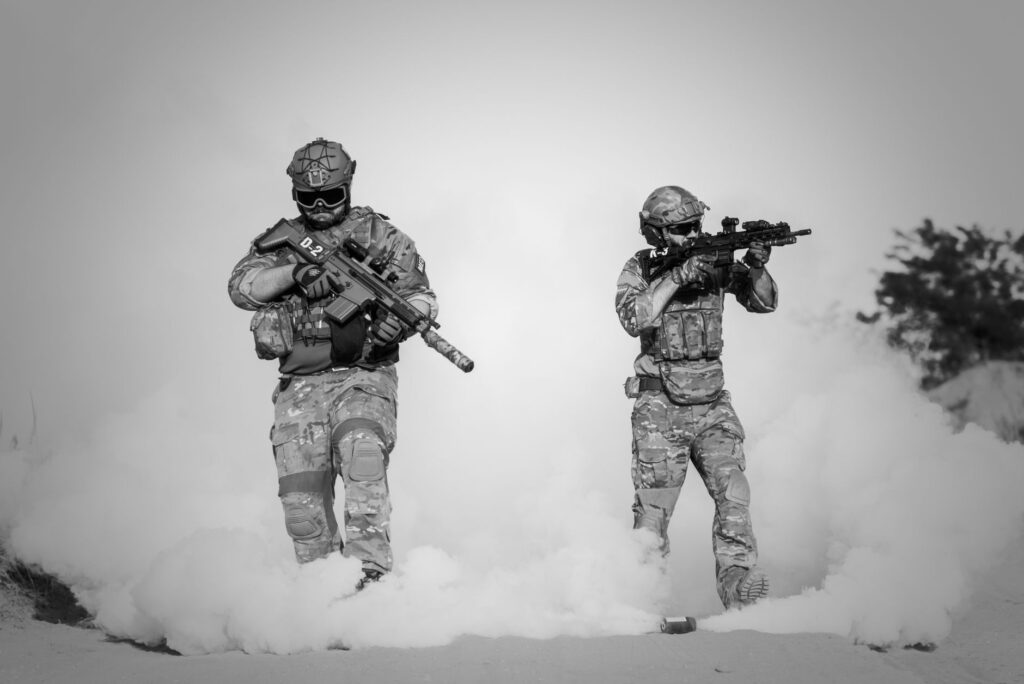
Cyberspace is no longer just a backdrop to global politics. In today’s security landscape, cyber operations increasingly act as a fourth domain of conflict—alongside land, air, and sea—supporting decisions and actions that can culminate in real-world military outcomes. The growing entanglement between geopolitics and digital interference raises a hard question: when does intelligence activity become something closer to war?
This article looks at how adversarial cyber activity intersects with kinetic force of arms. It focuses on the motivations behind nation-state cyber behavior and explains why stealthy access can matter as much as aircraft, ships, or troops. Finally, it examines how recent examples across multiple regions illustrate this shift.
The fourth battlefield: why cyberspace matters
Modern warfare is often described as having three categories: kinetic war, cyberwar, and cyber-kinetic operations. In practice, these categories blend. Cyber operations may occur before physical conflict begins, they may run in parallel with kinetic action, and in some cases they can directly create physical effects by damaging systems.
What makes the cyber domain distinct is not only the technology, but the way time and visibility are managed. Rather than “loud” disruption, nation-state activity tends to prioritize long-term access and low detection risk—an approach that can last weeks or months. The goal is frequently to set conditions for later action, including faster targeting, reduced uncertainty, or disrupted communications.
Espionage as a core driver of cyber operations
Espionage is often not treated as “war” in the traditional sense. It has existed for centuries, and military thinkers have long argued that spies can be foundational to advantage. But cyber expands espionage in scale and purpose.
Nation-state cyber operations used for intelligence are often motivated by both military and economic interests. Monitoring capabilities, locating sensitive assets, and stealing information can help states plan more effectively—and can also pressure private-sector systems that are connected to national infrastructure.
Nation-state vs. criminal activity
Cybercrime and geopolitically motivated cyber operations can look similar at first glance. But the incentives differ. Criminal actors are typically driven by financial gain and may aim for speed and low cost. Noise can be acceptable if the objective is to enter, extract value, and exit quickly.
By contrast, nation-state cyber operations are generally characterized by “low and slow” behavior. Stealth and prolonged dwell time are key. In other words, the value often comes from being present long enough to understand, manipulate, and enable later operations.
How cyber operations support kinetic conflict
Kinetic conflict typically arises from political goals such as regime change or territorial disputes. The pattern described in the source material is consistent: aggressive cyber operations commonly appear as precursors to kinetic action or occur alongside it.
That does not mean cyber operations “replace” military force. Instead, they are portrayed as preparation and support—ways to hasten advantage and reduce friction. The core argument is that cyber rarely wins wars on its own, but it can increase the odds of kinetic success by enabling or smoothing later steps.
Regime change and cyber-enabled effects
Regime-change attempts illustrate how cyber can be woven into broader strategies. Two cases discussed are Venezuela and Iran.
Venezuela: removal and contested outcomes
A kinetic U.S. operation on January 3, 2026, removed Nicolás Maduro from Venezuela. The source indicates this operation almost certainly involved a cyber component—at minimum as pre-kinetic intelligence gathering. It also notes that operational support, potentially related to a blackout event, is likely but not confirmed publicly.
After the operation, senior leadership reportedly referenced Cyber Command as part of layered “different effects.” The immediate intent was regime change and increased U.S. influence over Venezuelan oil. According to the described outcome, the operation achieved influence in oil but did not achieve the broader political objective of regime change, and narcotics flows continued through established transit routes.
Iran: degrading defense networks and shaping messaging
In the case of Iran, joint U.S. and Israeli combat missions launched on February 28, 2026, were described as having two main purposes: disrupting Iran’s path to nuclear weapons and enabling regime change. Cyber operations are described as playing an important role in the launch of kinetic action.
The source reports that cyber activity degraded radar grids to enable an initial wave of airstrikes. It also mentions that psychological cyber operations were used to deliver anti-regime messaging—targeting messaging channels, government communication lines, and public apps with the expectation of public uprisings.
Despite the apparent tactical success of the remote kinetic action, Iran’s position did not collapse. The conflict is described as ongoing, with retaliatory kinetic and cyber activity continuing. The implication is that cyber-enabled kinetic action may disrupt capability and command structures, but it does not guarantee political transformation.
Territorial disputes and the role of long-term cyber hostility
Territorial disputes provide another lens into why cyber operations have become deeply embedded in geopolitical conflict. The source highlights ongoing war in Ukraine and the major dispute over Taiwan.
Ukraine: preparation through disruption and destructive activity
Russia’s invasion of Ukraine on February 24, 2022 is presented as fundamentally tied to territorial claims. It also reflects the historical and geopolitical linkage between the two countries and the idea of Ukraine functioning as a buffer between Russia and Western institutions.
The cyber pattern described spans years and escalates sharply before the full-scale invasion. For Crimea, the source points to cyber operations dating back to 2013, including a campaign referenced as “Operation Armageddon,” and it notes that malware associated with relevant groups was used against Ukrainian systems. As kinetic actions began, Russian forces and cyber units allegedly targeted communications and governance systems, including DDoS against websites and media.
For the mainland invasion, the source describes an escalation in late 2021 and 2022, including wiper attacks and disruption of services tied to aviation, finance, defense, and IT. It also mentions interference with satellite communications—particularly affecting modems and, more specifically, degrading military command-and-control capabilities.
Still, the text emphasizes that while cyber activity likely achieved its intended disruptive effects, kinetic outcomes remained uncertain. After several years, Russia had not achieved decisive success. The core takeaway: cyber can assist, but it does not automatically determine battlefield outcomes.
Taiwan: years of cyber pressure and strategic pre-positioning
The Taiwan dispute shows a different stage of escalation. The source describes no specific kinetic action from China at the time of writing, but it highlights sustained cyber hostility and significant pre-positioning inside Western critical industries.
As an example, it points to China’s Volt Typhoon, described as operating for years and embedding itself in utility-related sectors such as communications, energy, transportation, and water. The described purpose is to enable disruption of essential services during a future crisis—potentially any response by the U.S. to an invasion scenario involving Taiwan.
The economic stakes are presented as unusually high for Western economies because Taiwan supplies a substantial share of advanced chip manufacturing. Without Taiwan’s fabrication capacity, the text argues, it would be difficult for major technology companies to manufacture the processors they rely on—while AI progress would also face constraints due to challenges in building the necessary data-center infrastructure.
Because of this dependency, the source suggests the U.S. may be more assertive in support of Taiwan than in supporting Ukraine. However, it also states that it is not known whether cyber pressure prevents a kinetic move or merely delays it. The longer conflict escalation takes, the less predictable the trajectory becomes.
When does cyber become “war”?
A recurring theme in the source is the difficulty of labeling cyber activity as “at war.” Historically, war was linked to visible armies on a battlefield or formal declarations. Cyber operations complicate that framework because espionage can be continuous and hard to define precisely as hostilities.
The text notes that in the U.S., and later across NATO, cyber was officially recognized as a military domain. As a result, the cyber battlefield can be seen as a place where quasi-war conditions emerge—especially when cyber operations target military-adjacent intelligence or operational systems.
At the same time, the source emphasizes that not every espionage-like action leads to full kinetic retaliation. If it did, continuous global conflict would arguably be the norm. That distinction—between common intelligence activity and escalation during a broader military confrontation—forms a key interpretive challenge.
What these cases collectively suggest
The examples discussed—Venezuela, Ukraine, Iran, and Taiwan—are used to argue that over roughly the past 15 years, cyberspace has become embedded in geopolitical military action worldwide. In each case, cyber operations appear as part of a broader strategy to disrupt, prepare, and support later steps.
The source also points out that even when cyber actions and kinetic operations align, no single factor guarantees success. For Venezuela, the kinetic operation included boots on the ground, and it did not fully accomplish regime-change goals. For Iran, ground forces were not involved in the same way, and the conflict remains unresolved. For Ukraine, cyber disruption ran alongside four years of kinetic conflict, yet no decisive winner has emerged.
Looking ahead, Taiwan remains a major concern. The text frames the future as potentially involving two major powers with nuclear capabilities, where hostile competition between East and West could remain—or intensify—inside cyberspace before anything becomes overtly kinetic.
Conclusion: cyber operations will keep moving closer to the front line
Cyberspace has become more than a supporting tool. Cyber operations now help states gather intelligence, degrade defenses, disrupt communications, and shape conditions for political and military outcomes. Even so, the central message is balanced: cyber can enable and accelerate kinetic action, but it does not reliably determine final outcomes on its own.
For policymakers, defenders, and businesses connected to critical infrastructure, the implication is clear. Cyber operations are no longer just a technology issue—they are part of how geopolitical conflict is prepared and prosecuted.